
🍂 Holding Onto Summer & Looking Ahead to a New Mystery
There’s always a touch of sadness when the season ends—so many beautiful days now tucked away like seashells in a drawer.


Bittersweet, contemplative, fun, and wonderfully amazing—each summer reminds me how fleeting time can be, and how precious every minute is.
Here’s to carrying a bit of that summer warmth into the seasons ahead.
What’s Happening…
I keep reminding myself that Powers of Death is still months from release—but tell that to my imagination!
Picture Sabina’s next mystery cover—what do you see? Email hello@liisaeyerly.com

✍️ Author Lingo: What’s a Trope?
A “trope” is a recurring theme, idea, or storytelling device that readers instantly recognize—like a familiar pattern woven through books, movies, or shows. Tropes are the ‘building blocks’ of storytelling, but what makes them shine is how creatively an author uses (or twists) them.
In my Secrets of Ephesus mysteries, for example, I play with the “clever female sleuth” trope—only mine happens to be a ‘first-century Christian woman’ navigating the intrigues of Roman society. That historical and spiritual angle gives the familiar trope a fresh, distinctive twist.
Here are a few tropes you’ll find in Powers of Death:
- The Reluctant Sleuth – An ordinary person drawn into solving a crime out of necessity or conscience.
- Forbidden Knowledge – Secrets, scrolls, or “dangerous truths” that could upend lives if revealed.
- The Innocent Accused – Someone falsely blamed, driving the sleuth to seek justice
- The Inconvenient Love Interest
- Jealous Relative/Greedy Nephew
New Recommended Mystery Author
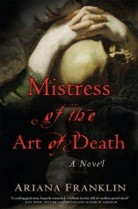 Adelia Aguilar is a rare thing in medieval Europe – a woman who has trained as a doctor. Her specialty is the study of corpses, a skill that must be concealed if she is to avoid accusations of witchcraft. But in Cambridge, a child has been murdered, others are disappearing, and King Henry has called upon a renowned Italian investigator to find the killer – fast. What the king gets is Adelia, his very own Mistress of the Art of Death.
I loved it!!! I listened to it on audio, and the narrator was excellent.
Bread, Olives, and Posca — Everyday Meals of the Common Roman
 If you lived in ancient Rome, your day might begin with day-old bread dipped in watered wine and end with a bowl of lentils flavored with garum.
 Curious what the average Roman family actually ate?
There is a time for everything, and a season for every activity under the heavens. Ecclesiastes 3:1 (NIV)