
Rome’s Gardens of Eden: Beauty, Temptation, and Betrayal Part 2
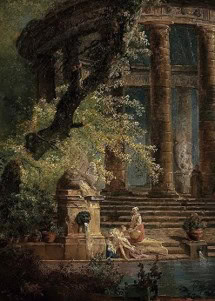 Roman gardens were designed as earthly paradises—places of beauty, tranquility, and escape. Yet some of the empire’s most notorious betrayals, executions, affairs, and political conspiracies unfolded among their fountains, flowers, and shaded walkways.Artist Carl Hasenpflug (1802-1858)
Asiaticus, the wealthy owner of the Gardens of Lucullus, unluckily fell under the covetous eye of the empress Messalina, wife of the Emperor Claudius. Messalina was determined to own the immense seventeen acres of exotic plants, sumptuous buildings with large open balconies, porticos to walk, fountains, and baths that she had fallen in love with. And to initiate the real estate transaction, she convinced Claudius to condemn Asiaticus to death on charges of failing to maintain discipline amongst his soldiers and adultery.
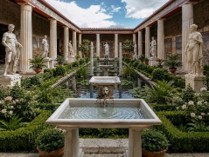 The gardens were laid out by Lucius Licinius Lucullus about 60 BC. He lavishly poured the wealth and treasure acquired during his celebrated military campaign into his rural villa and its garden, filling them with marble pergolas, fountains, mosaics, paintings, and Greek sculpture, both originals and copies of “old masters”.
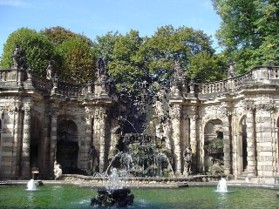 It is recognized as one of the most famous gardens, known for projecting a sense of perfect harmony. One of the main characteristics was a monumental staircase linking the multiple levels to a gigantic half-circular nymphaeum, a sanctuary or temple dedicated to water nymphs. Its pools can be used for bathing or ablutions. Diego Delso, CC BY-SA 4.0 <https://creativecommons.org/licenses/by-sa/4.0>, via Wikimedia Commons: de:Benutzer:elinore, CC BY-SA 3.0 <http://creativecommons.org/licenses/by-sa/3.0/>, via Wikimedia Commons
 The garden’s tranquility was wretched apart when Messalina, while still married to Emperor Claudius, married her lover, Senator Gaius Silius. She fled to her beloved sanctuary gardens with her mother. There she awaited Claudius’s judgment and ultimately met her death at the hands of the Praetorian Guard. Georges Rochegrosse, Public domain, via Wikimedia Commons; https://www.maquettes-historiques.net/P43.html The site, now in the heart of Rome, remains a rich archaeological source.